館藏介紹
All Category
The documents housed in the Archives can be roughly grouped into five categories: Foreign Ministry Collection (1861-2009), Economic Ministry Collection (1903-1980), Personal Papers, Other Organizations, and Historical Maps.
(1843-1945)
(1901-1908)
(1906-1912)
(1911-1914)
(1900-1948)
(1913-1927)
(1913-1925)
(1861-1901)
IntroductionThe Zongli Yamen 總理衙門, short for Zongli Geguo Shiwu Yamen (Office in Charge of Foreign Affairs) 總理各國事務衙門 was established by the Qing government in 1861 after the Convention of Beijing as the government body in charge of foreign policy. It was abolished by the Qing government in 1901 and replaced by the Wai Wu Bu (Ministry of Foreign Affairs) (see Fonds No.02).
(1689-1943)
IntroductionAccording to the Boxer Protocol辛丑和約, the Qing government established the Wai Wu Bu外務部in 1901 to supersede the Zongli Yamen總理各國事務衙門 (see Fonds No.01) as its official Foreign Office. It was dissolved in 1912 with the fall of the Qing and was replaced by the Ministry of Foreign Affairs, Beiyang Government (see Fonds No.03).
(1843-1945)
IntroductionSoon after the establishment of the Republic of China, political power fell into the generals of the Beiyang Army based in Peking, giving its name to the Chinese government between 1912 and 1928.
(1925-1948)
IntroductionSoon after its establishment in Guangzhou in July 1925, the Nationalist Government set up a Ministry of Foreign Affairs. It was put under the Executive Yuan in October 1928 and then further replaced the Beiyang Government’s Ministry of Foreign Affairs (see Fonds No.03) at the end of that year when China was nominally unified under the Nationalist Government.
(1901-1908)
IntroductionThe Qing government established the Ministry of Commerce in July 1903 to take over the Bureau of Mines and Railways established in the Hundred Days' Reform (Wuxu Bianfa) in 1898.
(1906-1912)
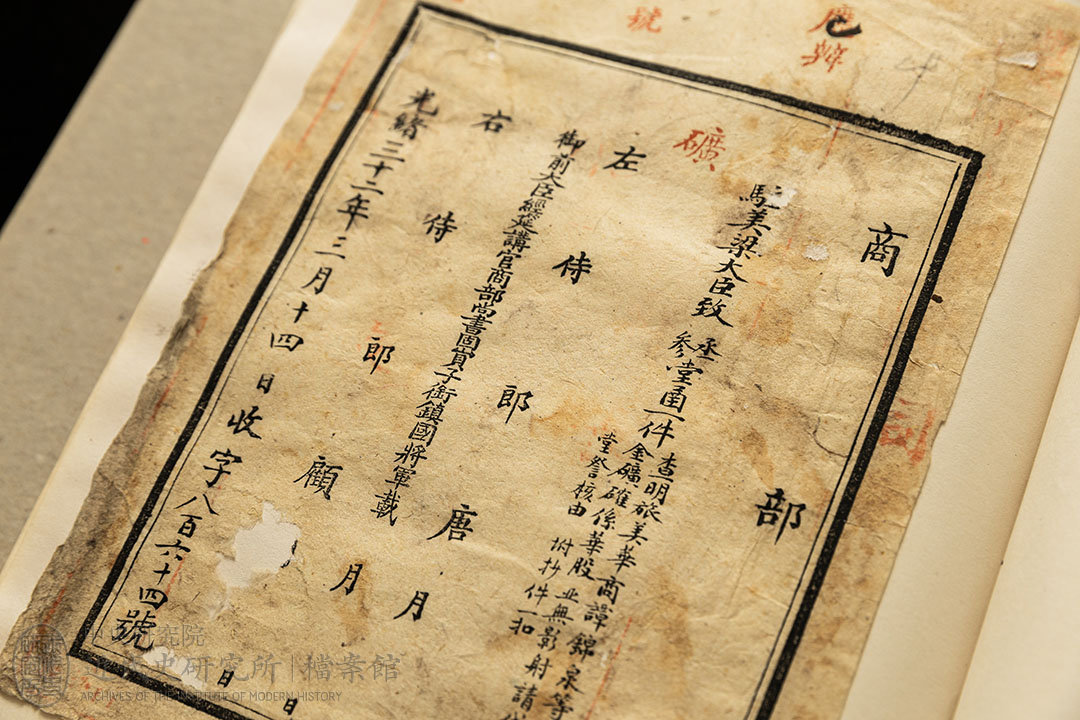
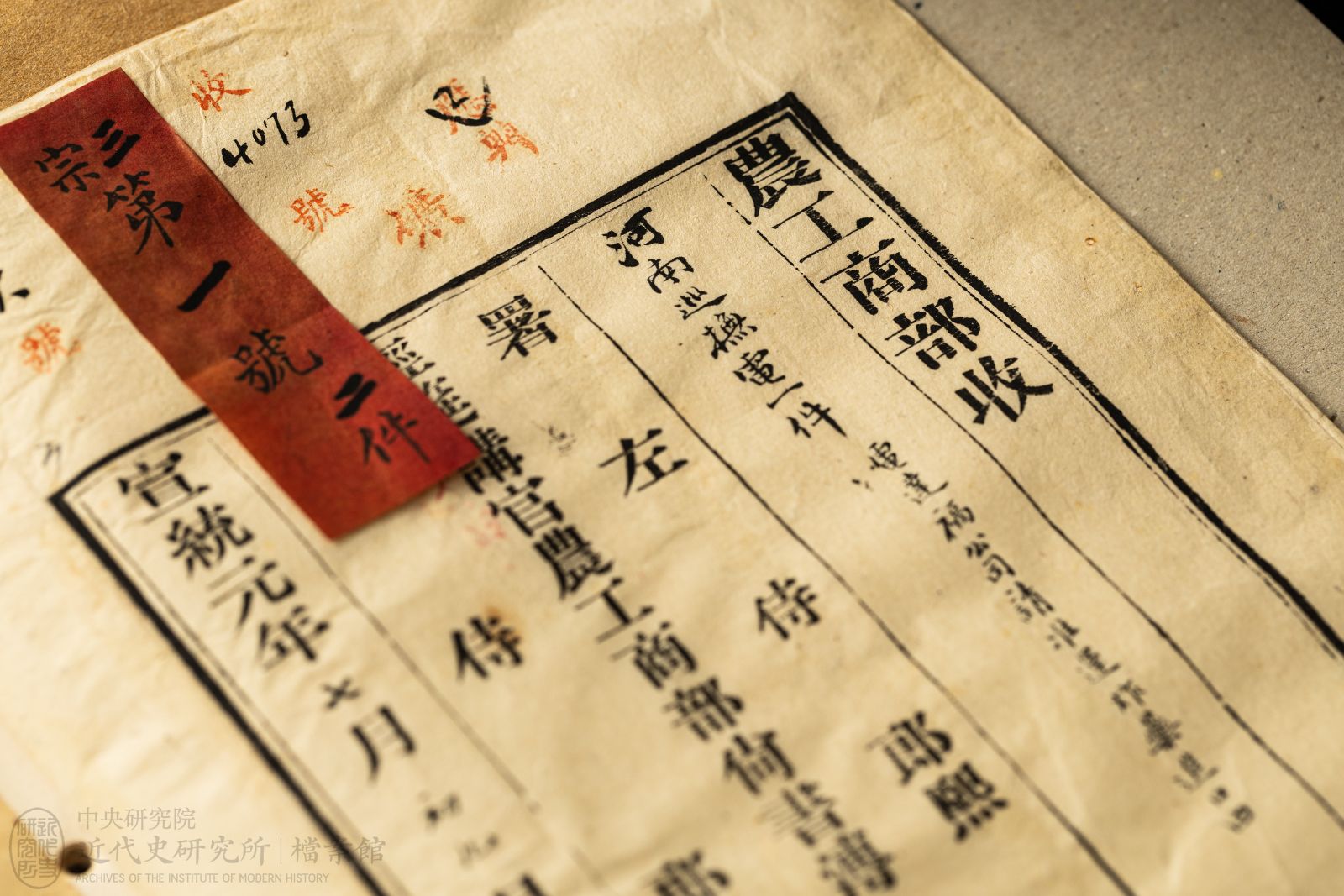
IntroductionThe Qing government merged the Ministry of Works 工部 with Ministry of Commerce 商部 in 1906, and created a new Ministry of Agriculture, Industry and Commerce. In addition, some of the sectors originally belonging to the Ministry of Foreign Affairs and Ministry of Revenue such as machinery manufacturing and animal husbandry were also incorporated into its area of responsibility. After the reorganization, it became the highest authority on China’s agriculture, industry and commerce, until 1912 when it was divided into the Ministry of Agriculture and Forestry 農林部 and Ministry of Industry and Commerce 工商部 (see Fonds No.07) by the Beiyang government.
(1911-1914)
IntroductionThe Ministry of Industry and Commerce was established in August 1912, in charge of China’s industry, commerce, and mining. It soon merged with the Ministry of Agriculture and Forestry in December 1913 to form a new Ministry of Agriculture and Commerce (see Fonds No.08).
(1900-1948)
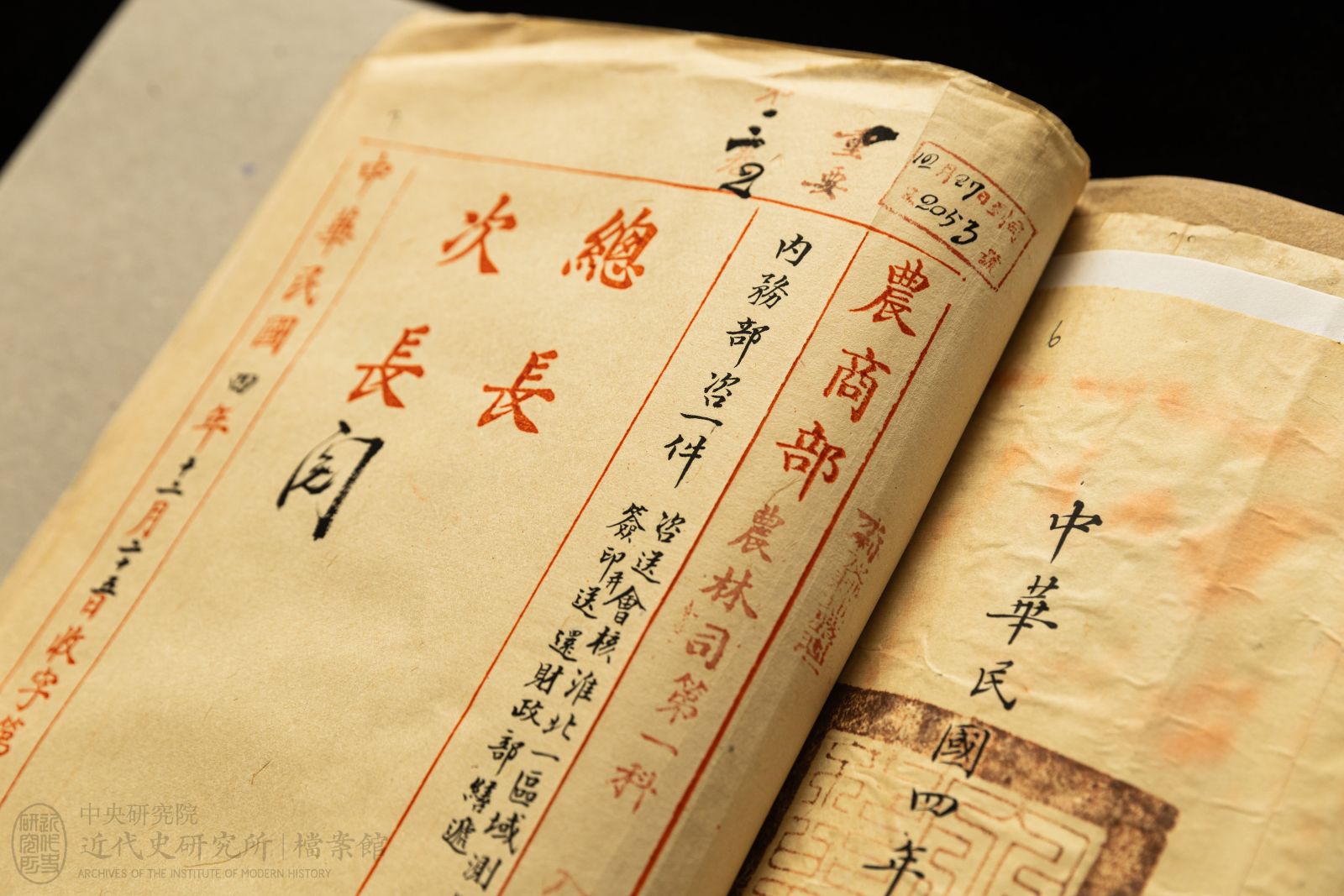
IntroductionThe Ministry of Agriculture and Commerce was established in December 1913 by merging the Ministry of Industry and Commerce (see Fonds No.07) and the Ministry of Agriculture and Forestry. It was in charge of China’s agriculture, forestry, water resources, land reclamation, and industry and commerce until dissolution in June 1927.
(1913-1927)
IntroductionWater resources affairs had been divided between the Ministry of the Interior 內務部 (See Fonds No. 10) and the Ministry of Agriculture and Commerce 農商部 (See Fonds No. 08) since the founding of the Republic of China in 1911. The Huai River General Bureau 導淮總局 was established in 1913 and further expanded into the National Water Conservancy Bureau in 1914 directly under the State Council, marking the beginning of central government administration of water resources. The Bureau was responsible for nation-wide water conservancy and the reclamation of riverbanks in theory.
(1913-1925)
IntroductionIn 1906, the Qing imperial government established the Ministry of Civil Affairs 民政部, the first modern agency responsible for national internal affairs. It was renamed the Ministry of the Interior in the Republican period, first by the Nanking Provisional Government in January 1912, and then the Beiyang Government in April of that year.